
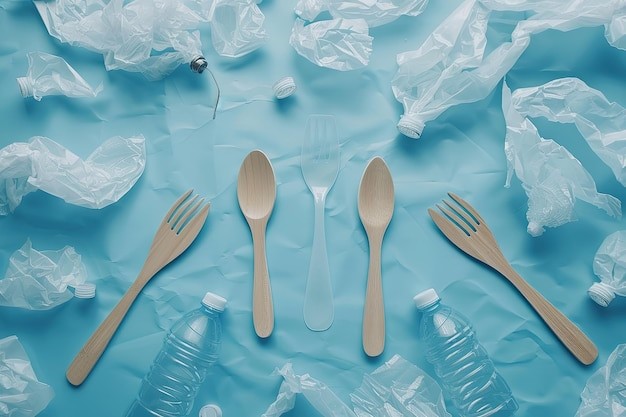
Researchers at the University of Copenhagen have developed an innovative biodegradable material made from barley starch and sugarbeet fiber. This new biocomposite offers a promising solution to the global plastic pollution crisis, as it decomposes naturally within two months, significantly reducing the environmental impact of plastic waste.
The Plastic Pollution Problem
Plastics are everywhere—from packaging to clothing to aircraft parts. Their durability, flexibility, and low cost have made them indispensable. However, plastics are also a significant environmental problem. They are difficult to recycle, often end up polluting nature, and contribute more CO2 emissions than global air traffic.
A Breakthrough in Bioplastics
The newly developed material from the University of Copenhagen aims to address these issues. Unlike existing bioplastics, which often require industrial composting and still contribute to microplastic pollution, this new material is fully biodegradable in nature. Made from amylose (a type of starch) and nanocellulose fibers from sugar industry waste, the biocomposite is both strong and flexible, suitable for various applications such as food packaging and shopping bags.
Potential for Large-Scale Production
The production of this new material can be easily scaled up. The necessary production chains for amylose-rich starch already exist, with millions of tons of potato and corn starch produced annually. The researchers are now in the process of securing a patent and are collaborating with Danish packaging companies to develop prototypes.
A Vision for the Future
Professor Andreas Blennow, who leads the research, believes that this new material could significantly reduce the plastic pollution problem. While recycling remains challenging, this biodegradable material offers a viable alternative that could eventually replace fossil-based plastics in many applications. Blennow envisions prototypes for packaging and other uses becoming a reality within the next one to five years.
This breakthrough represents a significant step forward in the fight against plastic pollution, offering a sustainable alternative that could help protect the environment for future generations.
Get In Touch
Contact Us
+6018 788 1618