
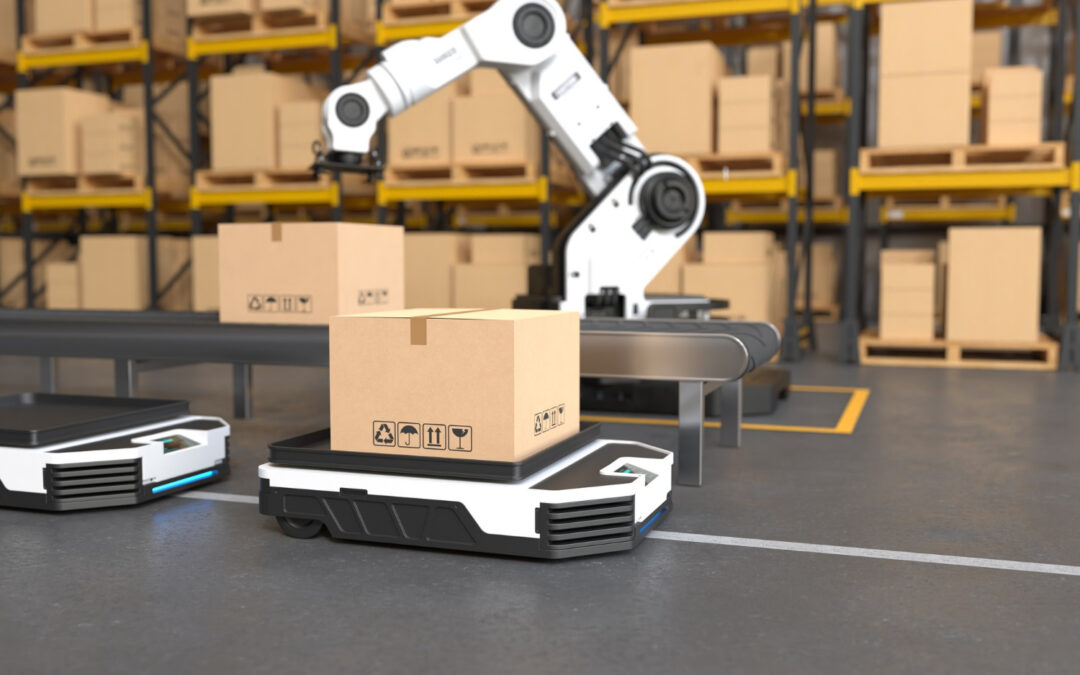
Industry 5.0 marks a decisive break from the manufacturing logic that has dominated global supply chains for decades. While Industry 4.0 focused on automation and digitalisation, Industry 5.0 pushes further — towards autonomous manufacturing systems, decentralised production, and the gradual elimination of warehousing as we know it.
In several advanced economies, this transition is already underway. Factories are evolving from human-operated facilities into self-governing production systems, while supply chains are being redesigned around real-time demand rather than inventory buffers. For Malaysia, this shift represents both a challenge and a strategic opportunity to reposition itself within the global manufacturing ecosystem.
From Automation to Autonomy
The defining feature of Industry 5.0 is autonomy. Manufacturing systems no longer simply assist human operators; they increasingly operate without human presence on the shop floor.
So-called lights-out factories run continuously, powered by advanced robotics, artificial intelligence (AI), and interconnected machines. These systems handle everything from material intake and assembly to inspection and packaging, operating with precision and consistency that human-dependent systems struggle to match.
Key enabling technologies include:
-
AI-driven robotics capable of learning and adaptation
-
Internet of Things (IoT) sensors enabling real-time monitoring
-
Edge computing to support instant decision-making
-
Future integration of quantum computing to manage massive data complexity
Unlike traditional automation, these systems are self-learning. They refine processes continuously, reducing error rates, downtime, and variability — while fundamentally altering the role of human labour in manufacturing.
Digital Twins and Autonomous Maintenance
Industry 5.0 factories are no longer managed primarily through physical oversight. Digital twins — virtual replicas of factories — allow operations to be monitored, simulated, and optimised remotely in real time.
Within these environments, predictive maintenance becomes autonomous. Sensors detect performance anomalies before failures occur, triggering robotic or software-based interventions without human involvement. The result is a manufacturing system that anticipates problems rather than reacting to them, significantly improving uptime and asset utilisation.
This shift reduces dependence on on-site technical labour and accelerates the move towards remote, high-value roles in systems design, analytics, and oversight.
Why Warehousing Becomes Redundant
Perhaps the most disruptive implication of Industry 5.0 is its impact on warehousing. Traditional supply chains rely on inventory as insurance against uncertainty. Industry 5.0 replaces this logic with real-time synchronisation.
Through AI-driven demand forecasting and hyperconnected supply networks, production aligns directly with actual demand. Goods are manufactured on demand and delivered immediately to customers or downstream operations, eliminating the need for large storage facilities.
In this model:
-
Inventory is replaced by data
-
Forecasting accuracy improves cash flow and reduces overproduction
-
Payments can occur before production, improving financial efficiency
Warehousing shifts from a necessity to an inefficiency.
Distributed Manufacturing and “Locationing”
Industry 5.0 also favours decentralisation. Instead of large, centralised factories serving distant markets, production is distributed across smaller, modular hubs located closer to customers.
This concept — increasingly described as distributed manufacturing — is reinforced by additive manufacturing technologies such as advanced 3D printing, which enable local, on-demand production of components and finished goods.
This approach delivers several advantages:
-
Reduced transport costs and emissions
-
Faster response to market changes
-
Greater resilience against global supply chain disruptions
-
Enhanced customisation for local markets
The emerging idea of “locationing” captures this shift succinctly: manufacturing is no longer optimised around scale alone, but around proximity, responsiveness, and sustainability.
AI-Orchestrated Supply Chains
Industry 5.0 supply chains are no longer linear. AI systems coordinate suppliers, manufacturers, logistics providers, and customers in real time.
Autonomous logistics systems dynamically optimise routing, while AI-driven customer experience modules translate demand signals directly into production instructions. This orchestration reduces waste, eliminates excess capacity, and allows manufacturers to operate with unprecedented precision.
Blockchain technologies further enhance this ecosystem by enabling transparent, decentralised tracking of materials and products, supported by smart contracts that automate transactions and enforce delivery conditions without intermediaries.
Sustainability by Design, Not by Compliance
Sustainability is not an add-on in Industry 5.0; it is embedded in system design. Autonomous manufacturing optimises resource use, minimises scrap, and enables circular production loops where by-products are reused or recycled in real time.
Energy systems increasingly integrate renewable sources, with AI balancing consumption to reduce peaks and inefficiencies. Localised production reduces emissions associated with long-distance transport, while just-in-time manufacturing curbs overproduction and waste.
In this context, sustainability shifts from regulatory compliance to competitive advantage.
What This Means for Malaysia
For Malaysia, Industry 5.0 represents a strategic inflection point. Competing on labour cost alone is no longer viable in a world of autonomous factories. Instead, competitiveness will depend on:
-
Digital infrastructure readiness
-
Talent in AI, systems engineering, and data science
-
Industrial policy that supports decentralised, high-tech manufacturing
-
Integration of sustainability into investment and site planning
Countries that adapt early can position themselves as hubs for advanced, resilient, and low-carbon manufacturing networks.
The Future Is Decentralised
Industry 5.0 signals the end of manufacturing as a labour-intensive, warehouse-dependent system. In its place emerges a model defined by autonomy, real-time intelligence, and distributed production close to demand.
Warehousing fades as data replaces inventory. Factories shrink in size but grow in intelligence. Supply chains become networks rather than pipelines.
For Malaysia, embracing this shift is not about following global trends — it is about shaping a manufacturing future that is resilient, sustainable, and globally competitive in an era where location, intelligence, and autonomy matter more than scale alone.