
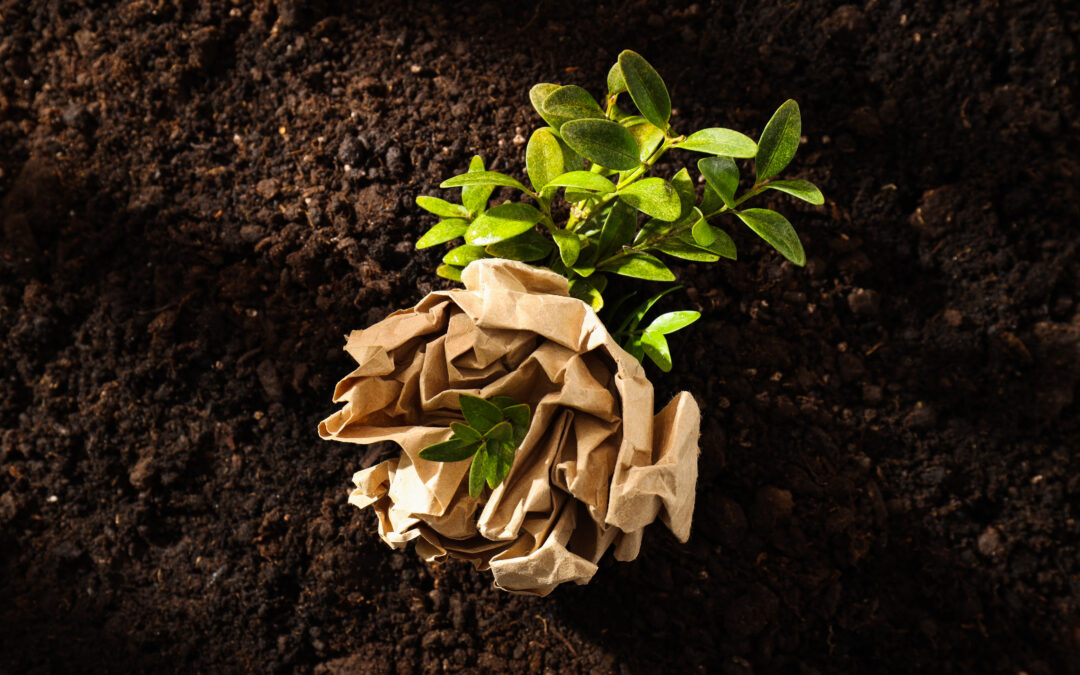
Compostable packaging is increasingly being positioned as an alternative to conventional plastic, particularly for products that are difficult to recycle. However, its environmental impact depends on far more than the material itself. Without adequate collection and composting infrastructure, even certified compostable packaging may end up in landfill.
This creates an important challenge for the packaging industry: compostability can only deliver its intended environmental benefits when the entire waste-management system is capable of supporting it.
Infrastructure is the biggest constraint
The United States has more than 2,500 composting facilities, but only around 200 full-scale facilities are estimated to process food waste. Most of the remaining facilities focus on yard waste, meaning that access to infrastructure capable of processing compostable packaging remains limited.
This infrastructure gap directly affects the value proposition of compostable packaging. A brand can invest in certified compostable materials, but if consumers have no convenient way to dispose of them through an accepted composting system, the environmental benefit is significantly reduced.
The economics also make large-scale expansion difficult. Composting facilities must generate sufficient revenue to cover land, labour, energy, maintenance and capital costs. Food waste provides a relatively dependable source of organic material and tipping-fee revenue, while compostable packaging is often viewed by operators as a potential contamination risk.
As a result, the growth of compostable packaging cannot be separated from investment in collection, sorting and industrial composting capacity.
The impact on businesses
For retailers, manufacturers and brands, this creates a more complicated sustainability decision.
Compostable packaging can help companies reduce their reliance on conventional plastics, but simply switching materials does not guarantee a better environmental outcome. Companies need to consider where their packaging will be used, whether consumers have access to appropriate collection systems, and whether local composting facilities will actually accept the material.
This means packaging design is increasingly becoming a systems-level business decision rather than simply a material-selection decision.
For example, compostable packaging may make greater sense for food-service applications where packaging is collected together with food waste. A ketchup sachet, pastry wrapper or other small food-contaminated item may be difficult or uneconomical to recycle through conventional systems, but could potentially be processed alongside organic waste where suitable composting infrastructure exists.
The situation is very different for packaging used in homes and offices. Produce bags, e-commerce mailers and other flexible packaging may leave consumers with no convenient composting route, particularly in regions without residential food-scrap collection.
Consumers face a growing disposal problem
The infrastructure gap also creates confusion for consumers.
A package labelled “compostable” can easily be interpreted as something that can simply be placed in a household compost bin or discarded with organic waste. In reality, many compostable products require specific industrial composting conditions.
The result is a risk of contamination. Composters may reject loads containing conventional plastics or compostable products that do not break down within the facility’s required timeframe.
This makes clear labelling and consumer education critical to the success of compostable packaging. Without them, greater use of compostable materials could unintentionally create additional waste-management problems rather than solve existing ones.
Regulation is reshaping the market
The growing concern over misleading environmental claims is also increasing regulatory pressure.
Authorities in the US are moving to address claims that packaging is recyclable, biodegradable or compostable when the necessary infrastructure may not actually exist. This is significant because it shifts sustainability claims away from simply describing the material and towards demonstrating its real-world end-of-life pathway.
Third-party certification therefore becomes increasingly important. Certification standards such as ASTM D6400 assess compostability at the level of the complete package, including components such as coatings, inks and adhesives.
For businesses, this can reduce the risk of greenwashing claims while giving consumers and waste operators clearer information about how a product should be handled.
Investment opportunities extend beyond packaging
Perhaps the biggest impact of the compostable packaging debate is that it highlights an investment opportunity beyond the packaging itself.
More compostable products entering the market will create limited environmental value unless there is corresponding investment in organics collection, transportation, processing facilities and markets for finished compost.
This creates potential opportunities for public-private partnerships, extended producer responsibility programmes, grants and private investment to expand composting infrastructure.
The development of these systems could also generate wider benefits by increasing the amount of food waste diverted from landfill. In this sense, compostable packaging can be viewed not only as a packaging solution but as part of a broader organics-management system.
Where compostable packaging can have the greatest impact
Compostable packaging is unlikely to replace conventional plastics across the entire packaging industry. Instead, its strongest potential lies in applications where recycling is already difficult or impractical.
Small, flexible and food-soiled packaging is one such category. Conventional recycling systems often struggle to capture these formats economically, while compostable alternatives may provide another end-of-life pathway when they can be collected with food waste and processed by an accepting facility.
Paper and fibre-based packaging may also offer opportunities, although their appearance alone does not guarantee compostability. Coatings, adhesives and inks can affect how the finished package behaves at end of life.
The key lesson is therefore not that compostable packaging is inherently better than plastic or recycling. Its environmental value depends on whether the material is appropriate for the application and whether the infrastructure exists to process it.
A complement, not a replacement
The growing compostable packaging market ultimately points to a broader shift in how sustainability should be evaluated.
Reducing unnecessary packaging, reusing materials and improving conventional recycling remain important. Compostability adds another pathway, particularly for packaging that cannot realistically be recovered through existing recycling systems.
The impact could be significant if these approaches develop together. But putting more compostable packaging on the market without investing in the systems needed to collect and process it risks creating a sustainability solution that exists largely on paper.
For businesses, the message is increasingly clear: the future of sustainable packaging will depend not only on what a package is made from, but also on what happens to it after consumers are finished with it.
If you want, I can also make this 25% shorter and more suitable for a policy/investment-impact article, with stronger emphasis on implications for the manufacturing sector.