
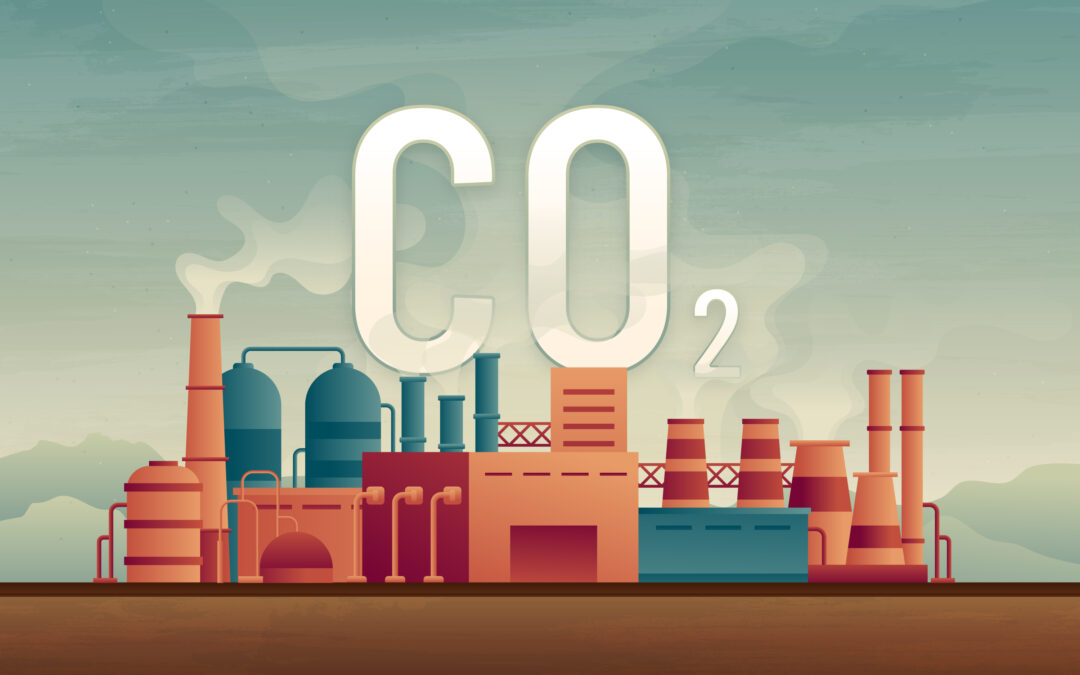
Plastic has become an essential material in modern society because of its affordability, durability, versatility, and lightweight properties. It is widely used in packaging, construction, transportation, healthcare, electronics, and many other industries. Despite these benefits, plastic production and disposal contribute significantly to greenhouse gas emissions and climate change. While plastic pollution is commonly associated with litter, ocean contamination, and harm to wildlife, its carbon footprint is another important environmental concern that deserves greater attention.
Measuring the carbon footprint of plastics is essential for understanding their contribution to climate change and identifying opportunities to reduce emissions. However, calculating this footprint requires more than examining emissions from plastic manufacturing alone. A comprehensive assessment must consider the entire lifecycle of plastic, from raw material extraction and transportation to production, use, recycling, and final disposal.
Understanding the Carbon Footprint of Plastics
A carbon footprint refers to the total greenhouse gas emissions associated with a product, activity, organization, or process. These emissions are generally expressed in kilograms or tonnes of carbon dioxide equivalent (CO₂e), which allows different greenhouse gases to be compared using a common unit based on their global warming potential.
For plastics, the carbon footprint includes emissions generated throughout the product lifecycle. Most conventional plastics are made from fossil fuel-based raw materials, particularly oil and natural gas. Extracting these resources, transporting them to processing facilities, converting them into chemical feedstocks, and manufacturing plastic products all require energy and generate emissions.
According to the Organisation for Economic Co-operation and Development (OECD), plastics generated approximately 1.8 billion tonnes of greenhouse gas emissions globally in 2019, equivalent to around 3.4 per cent of global emissions. Most of these emissions occurred during the production of plastics and the conversion of fossil fuels into plastic materials, while a smaller proportion resulted from waste management and disposal.
These figures demonstrate why measuring the carbon footprint of plastics is important. Without comprehensive lifecycle data, the environmental impact of plastic products may be underestimated, making it more difficult for governments, manufacturers, and consumers to make informed decisions.
Measuring Emissions Across the Plastic Lifecycle
The most effective way to measure the carbon footprint of plastics is through a lifecycle assessment (LCA). This method evaluates the environmental impacts of a product across defined stages of its lifecycle and helps identify where emissions occur.
1. Raw Material Extraction and Transportation
The first stage involves extracting the fossil fuels used to manufacture conventional plastics. Crude oil and natural gas are obtained through drilling and other extraction processes, which consume energy and can release carbon dioxide and methane.
Additional emissions arise when these raw materials are transported to refineries and chemical manufacturing facilities. The amount of emissions depends on the extraction method, transportation distance, fuel consumption, methane leakage, and energy sources used.
To measure emissions at this stage, researchers and manufacturers need data on the quantities of oil and natural gas extracted, the energy consumed during extraction, transportation distances, and the emission factors associated with each activity.
These emissions are important because they occur before the plastic material itself is manufactured. Excluding them can lead to an incomplete estimate of the product’s total carbon footprint.
2. Plastic Resin and Material Production
The second stage involves processing fossil fuel feedstocks into chemicals and plastic resins, such as polyethylene, polypropylene, and polyethylene terephthalate (PET).
This stage can generate substantial emissions because chemical conversion and resin manufacturing require energy and involve industrial processes. The carbon footprint varies depending on the type of plastic, production technology, facility efficiency, and energy sources.
Research published in Nature Climate Change in 2019 estimated that resin production accounted for approximately 61 per cent of global plastic lifecycle emissions in the study’s assessment, while the conversion of resins into finished products accounted for around 30 per cent.
Measuring emissions from resin production requires information on the quantity and type of resin produced, fuel and electricity consumption, process-related emissions, and the carbon intensity of the energy supply.
Using renewable electricity, improving energy efficiency, and incorporating recycled materials can help reduce emissions associated with this stage.
3. Plastic Product Manufacturing
After resin production, the material is converted into finished products such as bottles, bags, food packaging, containers, pipes, and automotive components.
Manufacturing processes may include extrusion, injection moulding, blow moulding, and thermoforming. These processes consume electricity and heat, producing emissions according to the amount and type of energy used.
For example, a manufacturer producing one tonne of plastic packaging can estimate its manufacturing emissions by multiplying the electricity and fuel consumed by the corresponding emission factors. Additional emissions from materials, production losses, and other relevant processes should also be considered within the assessment boundary.
However, emissions from plastic product manufacturing alone do not represent the entire carbon footprint of plastics. Emissions from upstream chemical and resin production, fossil fuel extraction, transportation, and waste management must also be considered to obtain a more complete estimate.
4. Transportation and Distribution
Transportation contributes additional emissions when plastic materials and finished products move between suppliers, manufacturers, distributors, retailers, and consumers.
These emissions depend on the mode of transport, distance travelled, fuel efficiency, vehicle load, and quantity of goods transported. Air freight generally has a higher emissions intensity per tonne-kilometre than sea freight, although actual results depend on the specific transport operations.
A carbon footprint assessment should account for transportation activities that fall within its defined system boundary. This may include the delivery of raw materials, distribution of finished products, and transportation of waste to recycling or disposal facilities.
Accurate transportation records, including fuel consumption, shipment weights, and travel distances, can help improve the reliability of the calculation.
5. Product Use and Reuse
The use phase of a plastic product may have a relatively small direct carbon footprint, but its overall environmental impact depends on how the product is used and how long it remains in service.
For example, a durable plastic container that is reused many times may distribute its manufacturing emissions across numerous uses. In contrast, a single-use product may generate a new demand for raw materials and manufacturing for every use.
However, reuse is not automatically the lower-carbon option in every situation. Cleaning, transportation, durability, replacement rates, and the number of actual uses can influence the outcome.
To compare products fairly, researchers should define a common functional unit, such as delivering 1,000 litres of a beverage or packaging one kilogram of food while maintaining the required level of protection. This approach ensures that products are compared based on the service they provide rather than simply their weight.
6. Waste Management and End-of-Life Treatment
The final stage considers what happens when plastic products are discarded. Common pathways include recycling, landfilling, incineration, and environmental leakage.
Each pathway has different emissions implications.
Recycling requires collection, sorting, cleaning, and reprocessing, all of which consume energy. Nevertheless, recycled plastic can reduce demand for virgin resin and potentially avoid emissions associated with extracting and processing new fossil fuel feedstocks.
Landfilling may generate emissions through waste management operations, transportation, and associated energy use. Plastic itself is generally resistant to biodegradation, so its direct decomposition-related emissions may differ from those of organic waste. The broader impacts depend on the plastic type and landfill conditions.
Incineration can release carbon dioxide when fossil-based plastics are burned. The net emissions impact may depend on whether energy is recovered and how the assessment accounts for displaced energy production.
A reliable assessment should measure the quantities of plastic entering each waste pathway and apply appropriate emissions factors to estimate the resulting emissions and potential avoided emissions.
Methods for Calculating the Carbon Footprint of Plastics
Measuring plastic emissions requires a consistent methodology, reliable data, and clearly defined assessment boundaries. Three important approaches are commonly used.
1. Lifecycle Assessment
Lifecycle assessment is a comprehensive method for evaluating environmental impacts across a product’s lifecycle. It can cover raw material extraction, production, transportation, use, and disposal.
An LCA typically involves four main steps:
-
Define the goal and scope: Establish the purpose of the assessment, the product being evaluated, the lifecycle stages included, and the functional unit.
-
Collect lifecycle inventory data: Gather information on material inputs, energy consumption, transportation, manufacturing processes, and waste generation.
-
Calculate environmental impacts: Apply suitable emissions factors and greenhouse gas characterization methods to estimate emissions in CO₂e.
-
Interpret the results: Identify the stages responsible for the largest emissions and evaluate opportunities for improvement.
The ISO 14040 and ISO 14044 standards provide internationally recognized principles and requirements for conducting lifecycle assessments.
2. Emissions Factor Method
The emissions factor method estimates greenhouse gas emissions by multiplying an activity by an appropriate emissions factor.
The general formula is:
Greenhouse gas emissions = Activity data × Emissions factor
For example, if a plastic manufacturing facility consumes 10,000 kilowatt-hours of electricity and the applicable electricity emissions factor is 0.40 kilograms of CO₂e per kilowatt-hour, the estimated electricity-related emissions would be:
10,000 kWh × 0.40 kg CO₂e/kWh = 4,000 kg CO₂e
Therefore, electricity consumption would account for 4 tonnes of CO₂e under these illustrative assumptions.
This calculation covers electricity-related emissions only. A complete manufacturing footprint would also need to consider other relevant sources, such as fuel combustion, process emissions, raw materials, and upstream activities.
3. Input-Output and Supply Chain Analysis
Input-output analysis uses economic and industrial data to estimate emissions associated with the production of goods and services across interconnected sectors of an economy.
This approach can help researchers estimate emissions embedded in plastic supply chains, particularly when direct facility-level information is unavailable. For example, it may capture emissions associated with upstream chemical production and energy supply.
However, input-output estimates generally rely on sector averages and economic relationships. They may be less precise for individual products or facilities than assessments based on detailed physical activity data.
Combining economic models with lifecycle inventory data can provide a more complete picture of plastic-related emissions.
Challenges in Measuring the Carbon Footprint of Plastics
Despite improvements in environmental assessment methods, several challenges make it difficult to measure plastic emissions accurately.
First, lifecycle data remain incomplete across many industries. Available statistics may cover plastic product manufacturing without accounting for upstream resin production, fossil fuel extraction, or waste treatment.
Second, plastics are produced through complex global supply chains. Raw materials may be extracted in one country, converted into resin in another, manufactured into products elsewhere, and ultimately discarded in a different location. Tracking emissions across these stages requires cooperation between suppliers, manufacturers, governments, and waste management operators.
Third, emissions vary significantly by material type and production technology. Recycled polyethylene, virgin polyethylene, and PET cannot automatically be assigned the same emissions intensity. Even products made from the same plastic can have different footprints because of differences in electricity sources, production efficiency, transport, and product design.
Fourth, recycling assessments must avoid double counting and inconsistent assumptions. The emissions avoided by replacing virgin resin with recycled material depend on the quality of the recycled material, the amount of virgin production displaced, and the accounting method used.
Finally, the environmental impacts of plastic leakage and degradation are not fully captured by conventional carbon footprint measurements. A carbon footprint focuses on greenhouse gas emissions, while broader environmental assessments may also need to consider marine pollution, microplastics, toxicity, and ecosystem damage.
These limitations demonstrate why transparent methodologies, standardized reporting, and better data collection are essential for producing credible results.
Strategies to Reduce Plastic Carbon Emissions
Once emissions have been measured, the results can guide practical strategies to reduce the carbon footprint of plastics.
Increasing reuse and recycling: Reusing plastic products and improving recycling systems can reduce demand for virgin materials. Effective collection, sorting, and reprocessing systems are essential to ensure that plastic waste becomes a usable resource.
Improving production efficiency: Manufacturers can reduce emissions by upgrading equipment, minimizing material losses, improving energy efficiency, and optimizing production processes.
Using renewable energy: Replacing fossil-fuel-based electricity with lower-carbon energy sources can reduce emissions from plastic manufacturing and recycling facilities.
Designing products for circularity: Products designed for durability, repair, reuse, and recyclability can reduce material consumption and waste. Simplifying packaging materials and improving product design can also make recycling more effective.
Strengthening producer responsibility: Extended producer responsibility programs can encourage manufacturers to consider the collection, recycling, and disposal of their products when making design and material choices.
Improving emissions reporting: Governments and businesses should collect consistent data on plastic production, material composition, recycled content, energy use, and waste management. Transparent reporting makes it easier to identify emission hotspots and evaluate the effectiveness of reduction measures.
Considering alternatives carefully: Substituting plastic with another material does not necessarily reduce emissions. Paper, glass, metal, and other alternatives also have environmental impacts. Comparisons should use lifecycle assessments with equivalent functions, such as packaging performance, product protection, and the number of uses.
Conclusion
Measuring the carbon footprint of plastics is a critical step toward understanding and reducing their contribution to climate change. A comprehensive assessment must consider the full lifecycle, including fossil fuel extraction, transportation, resin production, product manufacturing, use, recycling, and final disposal.
Incomplete data, complex supply chains, differences in production methods, and inconsistent accounting practices continue to limit the accuracy of national and product-level estimates.
Lifecycle assessment, emissions factor calculations, and supply chain analysis offer practical methods for improving the measurement of plastic-related emissions. When supported by reliable data and transparent assumptions, these methods can help governments establish effective policies and enable businesses to identify the most important opportunities for reducing emissions.
Ultimately, effective climate action requires more than reducing plastic waste. It requires measuring emissions across the entire lifecycle, improving the transparency of plastic supply chains, and prioritizing interventions that deliver genuine environmental benefits. By strengthening measurement and accountability, governments, manufacturers, and consumers can make better-informed decisions and contribute to a more resource-efficient, low-carbon, and circular economy.
References
-
Organisation for Economic Co-operation and Development (OECD). (2022). Global Plastics Outlook: Economic Drivers, Environmental Impacts and Policy Options. https://doi.org/10.1787/de747aef-en
-
Zheng, J., & Suh, S. (2019). Strategies to reduce the global carbon footprint of plastics. Nature Climate Change, 9, 374–378. https://doi.org/10.1038/s41558-019-0459-z
-
International Organization for Standardization (ISO). ISO 14040: Environmental management — Life cycle assessment — Principles and framework.
-
International Organization for Standardization (ISO). ISO 14044: Environmental management — Life cycle assessment — Requirements and guidelines.