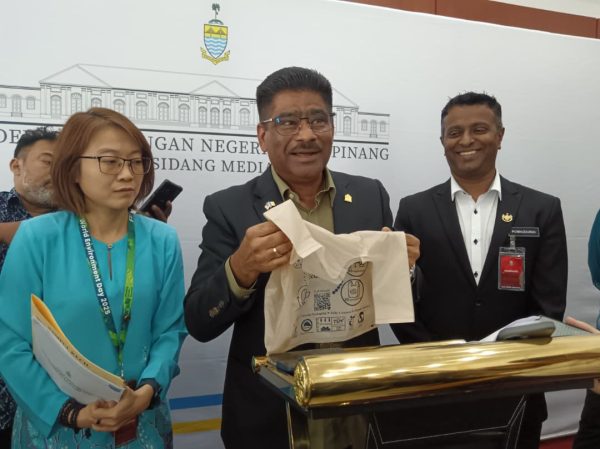
The Penang state government is strengthening its environmental agenda with the phased enforcement of the No Single-Use Plastic (NSUP) initiative beginning Sept 1, 2026. The move reflects the state’s commitment to reducing plastic waste, encouraging sustainable consumption, and building a circular economy ecosystem that balances environmental responsibility with business practicality.
According to Penang state housing and environment committee chairman S. Sundarajoo, the implementation will initially focus on selected categories of businesses under the “GP Plastic Bag Only” framework. The gradual approach aims to ensure a smoother transition for businesses and consumers without disrupting daily operations.
Selected Premises to Lead the Transition
The first phase will involve major retail and commercial outlets including hypermarkets, supermarkets, department stores, convenience stores, fast food outlets, petrol station convenience stores, chain stores, pharmacies, and clinics.
By targeting larger businesses first, the state government hopes to improve public familiarity and operational readiness before expanding the initiative further.
Hawkers and wet markets will be exempted during the initial phase due to operational challenges in handling wet and fresh goods, while suitable alternatives are still being assessed.
This practical approach highlights the need for sustainability policies to consider implementation realities, particularly for small traders and traditional businesses that remain important to Penang’s economy and culture.
Encouraging Sustainable Alternatives
Beyond restricting single-use plastics, the state government is also encouraging environmentally friendly alternatives such as biodegradable and bio-compostable packaging materials.
The growing demand for sustainable packaging is creating opportunities for green businesses and circular economy initiatives. In Malaysia, companies are already exploring alternatives derived from agricultural waste, plant-based materials, and spent coffee grounds to produce biodegradable products such as straws and plastic bags.
These innovations help reduce dependency on petroleum-based plastics while turning waste materials into valuable resources.
Members of the public are encouraged to follow the Penang Green Council social media platforms for updates on NSUP programmes and ReBag Station locations.
“No Plastic Straws” Initiative to Be Standardised
In addition to the NSUP initiative, Penang will standardise the implementation of the “No Plastic Straws” policy across both local councils — Penang Island City Council and Seberang Perai City Council — effective Sept 1, 2026.
Under the policy, plastic straws will be prohibited, while businesses are encouraged to adopt biodegradable and bio-compostable alternatives.
The move aligns with broader global efforts where governments and corporations are increasingly adopting sustainable packaging practices as part of climate and environmental commitments.
Building Long-Term Environmental Responsibility
Through the Penang Green Council and local authorities, the state government will continue public education and awareness programmes under the Community Education and Public Awareness (CEPA) initiative.
Sundarajoo stressed that the initiative is not intended to burden businesses or consumers, but to gradually build long-term environmental responsibility and sustainable living practices.
Penang’s latest move reflects a growing recognition that environmental sustainability is becoming increasingly important amid rising concerns over marine pollution, landfill waste, and climate change. The phased implementation model may also serve as a useful reference for other Malaysian states seeking to balance environmental goals with economic realities.
Rekafee Gives its Full Support
Rekafee also expressed its full support for Penang’s NSUP and “No Plastic Straws” initiatives, viewing the policy as a positive step towards strengthening environmental responsibility and accelerating the adoption of circular economy solutions in Malaysia.
Rekafee is a sustainability-focused initiative that transforms spent coffee grounds collected from local coffee shops into innovative eco-friendly materials. The brand develops products such as straws and plastic bags made from repurposed coffee waste, contributing to waste reduction and circular economy practices.
Through its waste-to-value approach, Rekafee demonstrates how local innovation can contribute meaningfully towards reducing environmental impact and plastic pollution. The initiative promotes the upcycling of spent coffee grounds into practical packaging solutions while encouraging sustainable consumption practices within the café and food & beverage industry.
Rekafee’s products are aligned with Malaysia’s environmental standards and comply with SIRIM ECO 001:2018 — Eco-labelling criteria for biodegradable and compostable plastic and bioplastic. This ensures that its materials meet recognised environmental safety and biodegradability benchmarks while supporting the nation’s broader sustainability agenda.
Cover Photo Souce: www.buletinmutiara.com