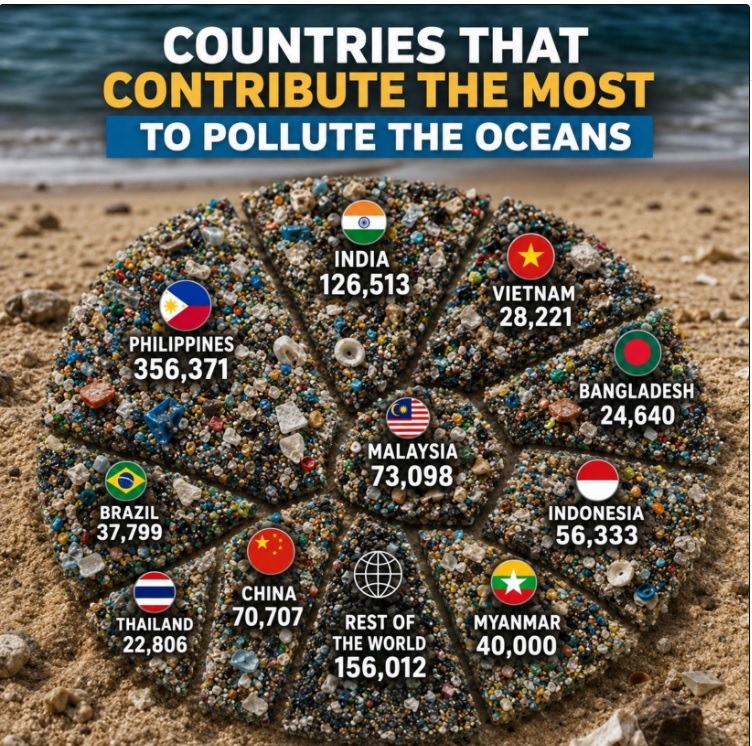
Plastic pollution has emerged as one of the defining environmental challenges of the 21st century. Every year, an estimated 11 million metric tonnes of plastic waste find their way into the world’s oceans, where they threaten marine biodiversity, damage coastal ecosystems, and pose increasing risks to human health. Although ocean plastic pollution is a global issue, research suggests that a significant proportion of plastic entering the oceans originates from a relatively small number of countries. According to the data presented in the infographic, the Philippines contributes the largest amount of ocean-bound plastic at approximately 356,371 metric tonnes annually, followed by India with 126,513 metric tonnes. Malaysia ranks third, contributing an estimated 73,098 metric tonnes each year.
Why Malaysia Ranks Among the Top Contributors
For many Malaysians, this ranking may come as a surprise. Malaysia has a population of around 35 million people—far smaller than countries such as India or China—yet it remains among the world’s largest contributors to marine plastic pollution. However, the figures should not be interpreted simply as an indication of excessive plastic consumption. Rather, they reflect the complex relationship between plastic use, waste management systems, population distribution, river networks, and coastal geography.
Malaysia’s Geography and Vulnerability to Marine Pollution
Malaysia’s geographical location makes it particularly vulnerable to marine pollution. Surrounded by the South China Sea, the Strait of Malacca, the Sulu Sea, and the Celebes Sea, the country possesses more than 4,600 kilometres of coastline. Numerous cities, ports, industrial areas, tourism destinations, and fishing communities are situated along these coastal regions. As a result, plastic waste that is improperly managed can easily be transported through drainage systems and rivers before eventually reaching the sea.
The Impact of Single-Use Plastics
One of the primary drivers of marine plastic pollution is the widespread use of single-use plastics. Plastic shopping bags, takeaway food containers, disposable cutlery, beverage cups, straws, and packaging materials have become part of daily life because they are inexpensive, lightweight, and convenient. However, these same characteristics make plastic difficult to manage after disposal. Items that are littered or improperly discarded often persist in the environment for decades or even centuries.
Waste Management Challenges and Land-Based Pollution
Malaysia has made considerable progress in improving waste collection and recycling infrastructure over the years. Nevertheless, challenges remain. Recycling rates are still relatively modest, contamination often reduces the value of recyclable materials, and illegal dumping continues to occur in certain areas. Heavy rainfall, which is common throughout much of the year, can wash plastic waste from streets and overflowing drains into rivers. Since an estimated 80% of marine plastic pollution originates from land-based sources, improving waste management on land remains one of the most effective ways to reduce ocean pollution.
Microplastics and Their Environmental Consequences
The environmental consequences of plastic pollution extend far beyond what is visible along beaches and coastlines. As plastic debris is exposed to sunlight, waves, and weathering, it gradually breaks down into tiny fragments known as microplastics. These microscopic particles have now been detected in oceans, rivers, drinking water, seafood, agricultural soil, and even within the human body. Marine animals frequently mistake plastic for food, resulting in internal injuries, starvation, and reduced survival rates. Turtles consume floating plastic bags that resemble jellyfish, seabirds ingest colourful plastic fragments, and fish inadvertently swallow microplastics suspended in the water. As these plastics move through the food chain, concerns continue to grow regarding their potential long-term impacts on human health.
The Importance of Protecting Malaysia’s Marine Ecosystems
For Malaysia, protecting the marine environment is not only an ecological responsibility but also an economic necessity. The country’s fisheries provide livelihoods for thousands of coastal communities and contribute significantly to national food security. At the same time, world-renowned destinations such as Langkawi, Redang, Tioman, Perhentian, Sipadan, and many other coastal attractions depend on clean beaches and healthy marine ecosystems to sustain tourism. Coral reefs, mangrove forests, and seagrass beds also serve as natural barriers against coastal erosion while supporting extraordinary biodiversity. Continued plastic pollution threatens these valuable natural assets and the communities that depend upon them.
The Role of Government, Businesses, and Innovation
Addressing this challenge requires cooperation across every level of society. Governments play an important role by strengthening waste management infrastructure, improving recycling systems, and implementing effective environmental policies. Businesses can contribute by reducing unnecessary plastic packaging, investing in sustainable product design, and developing biodegradable alternatives. Researchers and industry leaders are also exploring advanced recycling technologies that can recover more plastic materials while reducing waste sent to landfills.
Individual Actions That Make a Difference
Equally important is the role of individuals. Everyday choices—such as carrying reusable shopping bags, using refillable water bottles, refusing unnecessary disposable cutlery, separating recyclable materials, and disposing of waste responsibly—may seem small, but collectively they have the potential to significantly reduce plastic leakage into the environment. Community-led beach clean-ups, river conservation programmes, and public awareness campaigns further demonstrate how local action can contribute to national environmental goals.
A Call to Action for Malaysia
Malaysia’s position among the leading contributors to ocean-bound plastic waste should serve as a call to action rather than a source of discouragement. It highlights the urgent need to strengthen waste management systems, encourage sustainable consumption, and foster greater environmental awareness across society. While the challenge is considerable, it is also one that can be addressed through long-term commitment, innovation, and collaboration.
Securing Cleaner Oceans for Future Generations
The oceans have sustained humanity for generations by providing food, regulating the climate, supporting biodiversity, and driving economic growth. Protecting them requires recognising that every piece of plastic disposed of today has the potential to remain in the environment for decades. By embracing more sustainable practices and working together across government, industry, and communities, Malaysia has the opportunity to reduce its contribution to marine plastic pollution and help ensure cleaner, healthier oceans for future generations.
Image Source : global_insight_hub28